
Views: 0 Author: Site Editor Publish Time: 2026-08-15 Origin: Site


Choosing window treatments often creates a frustrating dilemma for homeowners. You might find yourself torn between the sleek, modern aesthetic of roller blinds and the highly touted energy efficiency of honeycomb blinds. Both options dominate modern interior design trends today. Yet, they serve vastly different functional needs in your home. You should not frame this decision as an absolute search for which is best overall. Instead, view it as a highly specific choice depending on room function, local climate, and your daily usage habits. A blind operating perfectly in a dry living room might fail quickly in a humid bathroom environment.
We will introduce a practical framework to guide your evaluation process. You will explore how both options stack up across thermal performance, light control capabilities, maintenance realities, and safety standards. This guide will help you finalize your purchase decision confidently. You will learn to match specific window treatments to the unique demands of every room.
Insulation: Honeycomb blinds drastically outperform roller blinds in thermal retention due to their cellular structure, making them ideal for drafty rooms or extreme climates.
Maintenance: Roller blinds are significantly easier to clean and resist moisture better, making them the superior choice for high-humidity areas like kitchens and bathrooms.
Light Control: Both offer blackout options, but roller blinds are more susceptible to side "light bleed" unless paired with side channels.
Family Safety: Both styles offer standardized cordless options, but flat-fabric roller blinds are generally more resistant to pet damage and sticky hands than delicate cellular fabrics.
The structural engineering behind your window treatments dictates their ultimate performance. We must examine how manufacturers build these two distinct systems. You will quickly see how physical shape influences everyday utility.
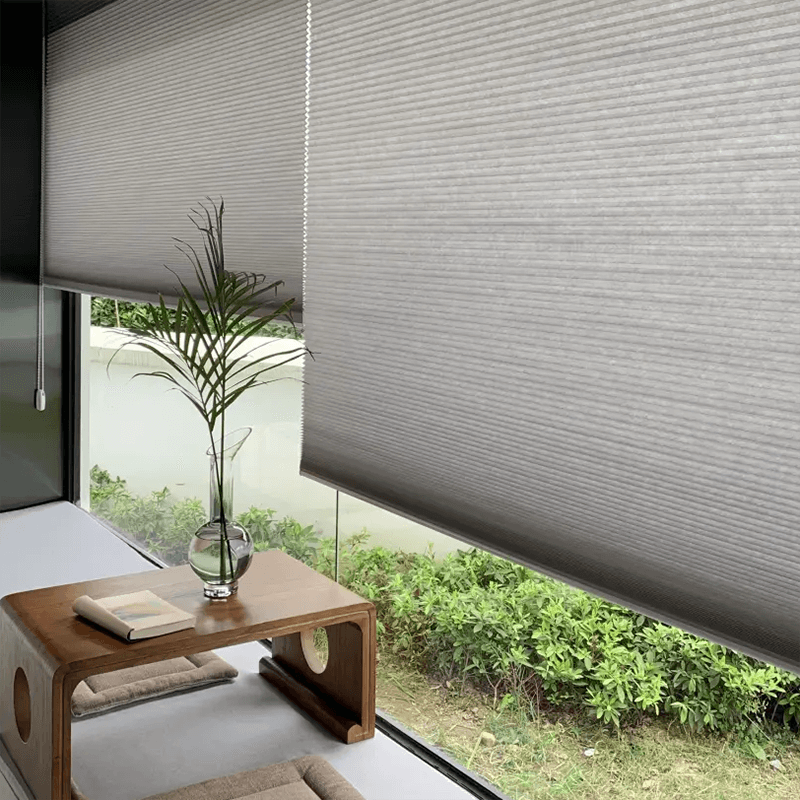
Engineers designed cellular structures to mimic bee honeycombs. These hexagonal pockets trap static air effectively. This trapped air creates a formidable physical barrier against thermal transfer. When you install honeycomb blinds, you add a distinct layer of climate defense to your home. Manufacturers bond pleated fabric layers together during production. This complex bonding process forms continuous cylindrical tubes. You can choose between single-cell or double-cell designs. Single cells look cleaner on larger windows. Double cells offer even more trapped air pockets for enhanced performance.
Contrast this intricate engineering against standard roller mechanisms. Roller options utilize a minimalist flat-fabric design. They rely entirely on fabric density for their functional performance. There is no structural depth involved here. A simple aluminum tube houses the rolled material. This mechanical simplicity makes them incredibly reliable over time. Manufacturers often treat these synthetic fabrics with UV-resistant coatings. This prevents fading when exposed to harsh sunlight daily.
Consider the visual impact both styles bring to your interior spaces. Cellular shades present a textured, pleated look. They add visual depth and softness to harsh window frames. When raised, they stack neatly into a surprisingly compact profile. Roller shades offer a flush, low-profile appearance instead. They disappear almost entirely when rolled up into their housing. You get a highly modern, industrial vibe. Minimalist decorators heavily favor this clean, uninterrupted visual line.
Windows represent the weakest link in your home's thermal envelope. Heat naturally moves toward cold areas. This movement causes massive energy loss throughout the year. Window treatments must combat this continuous thermal exchange.
The construction industry uses R-value to measure thermal resistance. Window treatments use this exact same metric. Cellular structures consistently score higher on this scale. A standard double-pane window offers an R-value around 2.0. Adding high-quality cellular shades can double this rating easily. They trap insulating air directly against the cold glass. Roller fabrics add negligible R-value to your windows. They simply cannot stop thermal transfer efficiently.
Consider summer cooling and winter heating scenarios. Trapped air pockets drastically reduce your daily HVAC loads. During brutal summers, they block intense radiant heat from baking your rooms. During freezing winters, they prevent warm indoor air from escaping outside. You will notice a stabilized room temperature immediately. This physical barrier stops uncomfortable drafts from creeping across your floors.
Standard roller versions lack an insulating air gap entirely. Heat transfers rapidly through these single-layer fabrics. Even thick materials succumb to thermal bridging quickly. They simply cannot block extreme temperature fluctuations. You will feel the cold radiating off a roller shade during winter nights.
Insulation Performance Metrics
Feature | Cellular Shades | Roller Shades |
|---|---|---|
Structural Core | Hexagonal air pockets | Single flat layer |
Thermal Barrier | Traps static air effectively | Relies solely on fabric weave |
Draft Reduction | High (especially outside mounts) | Low (air flows around edges easily) |
R-Value Boost | Significant improvement | Minimal improvement |
Controlling natural light directly impacts your sleep quality and daily comfort. Both product categories offer varying degrees of light management. However, their execution differs dramatically.
You must compare blackout capabilities closely. Manufacturers often line blackout honeycomb blinds with hidden metallic foil. This foil sits invisibly inside the interior cells. It guarantees zero light penetration through the fabric itself. Blackout roller materials rely on thick opaque vinyl instead. Some use heavily coated polyester blends. Both fabrics block direct light effectively across the main surface area.
You must consider the "halo effect" carefully. This remains a critical buyer pain point. Roller systems inherently require a functional gap. The fabric needs clearance space to bypass the window frame during operation. This mechanical requirement causes visible light bleed along the vertical edges. Sunlight creeps through these gaps constantly. Cellular structures fit much tighter inside the casing. They minimize edge gaps significantly. If you want a pitch-black room using roller styles, you must install additional side channels.
Highlight the top-down/bottom-up functionality available today. This feature revolutionizes daily privacy management. You can lower the top half of the shade while keeping the bottom entirely closed. Natural light floods your ceiling. Prying eyes cannot see into your living space. Standard roller styles rarely offer this advanced mechanism. Their rolling function dictates a strict top-to-bottom operation only.
Always choose an outside mount if absolute darkness is your primary goal.
Pair inside-mount roller shades with drapery panels to hide side light gaps.
Select foil-lined cellular options for shift workers needing daytime sleep.
Everyday life takes a toll on window treatments. You need to understand the realistic upkeep required. Maintenance routines vary wildly between these two styles.
Maintenance requires a transparent, evidence-based look. Cellular structures trap household dust easily. Dead insects occasionally find their way inside the horizontal cells. You cannot simply wipe them down. Water exposure can cause permanent staining on delicate paper-like fabrics. Mold can develop inside the cells if they get wet.
Here is the standard cleaning process for cellular fabrics:
Attach a soft brush dusting tool to your vacuum hose.
Turn the vacuum down to its lowest suction setting.
Gently run the brush horizontally across the pleats.
Use a can of compressed air to blow out debris inside the tubes.
Roller materials offer a distinct advantage regarding hygiene. You can wipe down PVC or treated fabrics effortlessly. A damp cloth removes surface dirt instantly. You can scrub away accidental food splatters without fear. High-humidity areas demand this level of extreme moisture resistance.
Child safety remains paramount for families. The industry has evolved significantly regarding cord hazards. Both styles comply with strict CPSC safety standards today. You can order either option in a completely cordless configuration. You simply push the bottom rail up or pull it down manually. This eliminates dangerous strangulation risks entirely.
Consider durability in high-traffic households. Cellular pleats remain notoriously fragile. Kids or pets can crush them easily during play. Once creased, the fabric rarely recovers its original geometric shape. Cat claws can puncture the thin material permanently. Roller styles provide a resilient, flat surface. They withstand sticky hands and curious pets much better. The heavier vinyl materials resist tearing and accidental impacts.
Window treatments represent a significant home investment. You must look beyond the initial price tag. True value emerges over years of daily usage.
Evaluate upfront pricing expectations carefully. Cellular options typically carry a higher initial price point. Their manufacturing complexity drives up production costs naturally. Bonding multiple fabric layers requires specialized machinery and precision. Roller shades generally offer a more budget-friendly entry point. Their straightforward material and simple aluminum tubes keep manufacturing costs low.
Look at long-term returns instead of just initial costs. Evaluate potential energy savings over a five to ten-year horizon. Superior insulation reduces your monthly heating and cooling bills. These incremental savings steadily offset the higher upfront investment. An energy-efficient home retains its ambient temperature longer. Your HVAC system works less frequently.
Examine home automation capabilities closely. You might want to control your shades via smartphone applications. Roller mechanisms stand as the industry standard for motorization. Their simple vertical mechanics make smart integration seamless. Battery-powered motors hide easily inside the top roller tube. You will find them cheaper and easier to automate. You can set schedules to lower shades automatically at noon. This prevents UV damage to hardwood floors. Cellular motorization exists but often costs significantly more. The dual-motor requirement for top-down/bottom-up features increases hardware complexity.
You should audit your home carefully before purchasing. Room function dictates the ideal window treatment. Use this practical framework to guide your final selections.
Sleep environments require maximum darkness and temperature stability. Drafty windows disrupt healthy sleep cycles.
We highly recommend blackout honeycomb blinds here.
They maximize light blocking perfectly when ordered as an outside mount.
The trapped air insulation keeps the room comfortable year-round.
Top-down/bottom-up features provide essential daytime privacy while allowing sunlight.
These zones generate intense humidity and airborne grease. Delicate fabrics degrade quickly in these harsh environments.
We strongly recommend roller styles for these specific spaces.
Moisture resistance remains non-negotiable near sinks and showers.
Flat PVC fabrics resist absorbing cooking odors completely.
You can wipe away accidental grease or soapy grime in seconds.
These transitional spaces prioritize aesthetic appeal and glare reduction. The choice here depends heavily on your geographic location.
Propose a split decision based on your specific climate.
Choose cellular options if you face freezing winters or scorching summers.
Choose roller versions if you prefer minimalist or industrial design aesthetics.
Light-filtering roller shades reduce screen glare perfectly in home offices.
Neither blind operates as objectively better in a vacuum. Your unique household environment determines the ultimate winner. Honeycomb designs dominate the insulation category. They protect your home from extreme weather effectively. Roller designs win the durability and maintenance categories hands down. They survive messy kitchens and high-traffic hallways effortlessly.
You must review your specific insulation needs versus your daily maintenance tolerance. Acknowledge your budget constraints for upfront costs versus future utility savings. Your actionable next step involves a simple home audit. Walk through your house room by room. Identify specific moisture risks and thermal requirements. Request fabric swatches for both styles to feel the textures yourself. Finally, book a professional measurement consultation to ensure a perfect fit for whichever style you choose.
A: Yes, they noticeably reduce energy transfer. However, realistic expectations remain crucial. Your overall savings depend heavily on your existing window grade and HVAC usage. Single-pane windows see dramatic thermal improvements. Modern double-glazed windows will see a smaller, yet still beneficial, reduction in total energy loss.
A: It depends entirely on the fabric chosen. Light-filtering fabrics allow vague silhouettes to be seen from outside when indoor lights shine brightly. Room-darkening or blackout fabrics block all light transmission, ensuring complete nighttime privacy. Always choose opaque materials for private spaces like bedrooms and bathrooms.
A: A blackout fabric blocks 100% of light passing through the material itself. However, the blind’s mechanical design creates a "halo effect." Necessary gaps between the fabric edge and the window casing allow sunlight to bleed through. You must install metal side channels for total blackout performance.
A: Both can easily last a decade with proper care. However, they fail differently. Cellular pleats slowly lose their crispness over time and are prone to crushing. Roller mechanisms might experience frayed fabric edges or internal spring fatigue after years of heavy daily use.


