
Views: 0 Author: Site Editor Publish Time: 2026-09-23 Origin: Site


Modern building envelopes face intense environmental pressures. Architects must prioritize dynamic climate control over static designs. Buildings today require active energy management. Mitigating solar heat gain has become an absolute necessity. Developers increasingly rely on exterior solar shading to reduce HVAC workloads in commercial and high-end residential builds. Catching solar radiation before it strikes the glazing makes a massive difference. Indoor temperatures drop significantly. Occupant comfort improves immediately.
This guide provides a structured, technical evaluation framework. It will help you specify and procure the right external venetian blinds. We bypass marketing jargon completely. You will discover exactly how to evaluate components, avoid structural risks, and ensure long-term performance. You can align system specifications directly to your project's architectural demands.
Profile selection dictates performance: The shape of your aluminum venetian slats (C, Z, or S) determines wind resistance, closure tightness, and light modulation.
Integration is a structural reality: Successful facade sun shading requires early planning for structural mounting points to avoid thermal bridging and water ingress.
Automation is non-negotiable: Long-term durability relies on automated wind-sensor retraction systems to prevent catastrophic weather damage.
Supplier vetting requires technical scrutiny: Choosing an external venetian blinds supplier should be based on warranty terms, custom extrusion capabilities, and compliance with local wind load codes.
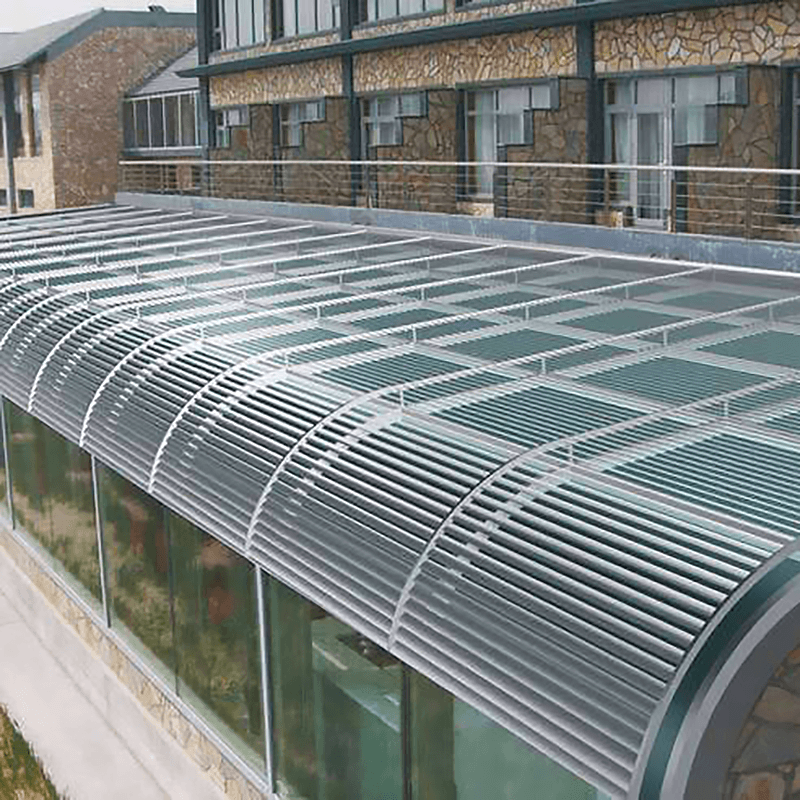
Effective facade sun shading blocks solar radiation before it hits the exterior glazing. Solar energy transforms into long-wave heat radiation upon passing through glass. This creates a greenhouse effect inside the building. Intercepting sunlight externally prevents this heat conversion entirely. Cooling loads drop substantially. You rely less on mechanical air conditioning during peak summer months. Building energy efficiency improves dramatically. We see immediate impacts on energy consumption metrics. You achieve clear performance returns by managing the building envelope actively.
Workspaces require a delicate balance between light and shade. Direct sunlight causes severe screen glare. It reduces productivity and causes eye strain. Completely blocking the sun creates a gloomy environment. It forces occupants to use artificial lighting. Dynamic tilting solves this problem. You can adjust slat angles to eliminate direct glare. Simultaneously, the slats bounce natural light toward the ceiling. This technique is called daylight harvesting. It maximizes natural light penetration deep into the floor plan. It keeps occupants comfortable and engaged.
A shading system must integrate seamlessly into the building envelope. It should never look like an afterthought. You must evaluate how the housing boxes blend into the architecture. Concealed pelmets hide the retracted slats completely within the facade cavity. Standoff distances dictate how far the guides sit from the glass. Custom RAL color matching ensures the hardware matches the window mullions perfectly. We recommend specifying these visual parameters during the schematic design phase. Early integration guarantees a clean, cohesive exterior finish.
The shape of your aluminum venetian slats dictates their functionality. You cannot treat all profiles equally. Manufacturers roll form the aluminum into specific geometries. Each geometry serves a distinct environmental purpose.
C-shaped profiles represent the industry baseline. They feature a simple, curved geometry. They work exceptionally well for standard commercial applications. They handle moderate wind zones without issue. However, they carry distinct limitations. C-slats do not interlock when closed. Light leaks through the gaps between the slats. They do not provide a complete blackout effect. They suit office buildings requiring basic glare control. They fall short in spaces demanding total darkness.
Z-shaped profiles prioritize rugged performance and precision. They feature sharp angles. The top and bottom edges interlock tightly when fully closed. Many feature integrated rubber sealing lips along the edges. These lips compress together. They provide excellent noise reduction. They block out light almost entirely. They offer superior structural rigidity. You should specify Z-slats for high-wind environments. They represent the best choice for bedrooms or AV rooms requiring maximum light exclusion.
S-shaped profiles bridge the gap between performance and design. They feature a continuous, flowing curve. They offer softer visual lines compared to the rigid Z-shape. They look elegant on premium residential facades. They suit architecturally sensitive commercial builds. Their aerodynamic shape provides excellent wind deflection characteristics. They also offer superb light dimming capabilities. The curved edges nestle closely together. They deliver a highly refined aesthetic.
Profile Type | Best Application | Wind Tolerance | Light Exclusion | Key Advantage |
|---|---|---|---|---|
C-Shaped | Standard Commercial | Moderate | Basic Shading | Cost-effective standard |
Z-Shaped | High-Wind, AV Rooms | High | Near-Blackout | Interlocking noise reduction |
S-Shaped | Premium Residential | Moderate-High | Excellent Dimming | Fluid architectural aesthetic |
Outdoor venetian blinds require robust stabilization against weather. Wind forces act heavily on flat aluminum surfaces. You must choose the right guiding system. Stainless steel cable guides offer a minimalist aesthetic. They remain barely visible against the glass. However, they carry a lower wind tolerance. The slats can flutter in heavy gusts.
Extruded aluminum side channels provide superior rigidity. They lock the slat pins securely in place. They withstand significantly higher wind loads. You must understand your site's local wind load classes. Integrated anemometers (wind sensors) remain an absolute necessity. These sensors trigger auto-retraction during severe weather. They protect the system from catastrophic wind damage.
Manual operation fails in large-scale commercial deployments. Automation guarantees consistent climate management. You must evaluate motor reliability closely. Industry leaders like Somfy and J Geiger manufacture specialized outdoor motors. Check the IP (Ingress Protection) ratings. Motors must carry at least an IP54 rating to survive outdoor moisture and dust. Modern systems integrate seamlessly into Building Management Systems (BMS). This compatibility enables automated sun-tracking. The blinds adjust their tilt angle continuously based on the sun's position. They synchronize perfectly with internal climate zones.
Exposure to ultraviolet light and extreme temperatures degrades inferior materials rapidly. Component durability determines the system's longevity. Lifting tapes bear the entire weight of the slat bundle. You must specify Kevlar-reinforced lifting tapes. Standard polyester tapes stretch and fray under prolonged UV exposure. Kevlar maintains its dimensional stability. Examine the hardware fixings carefully. Coastal environments demand marine-grade 316 stainless steel. Standard 304 stainless steel will pit and corrode over time. Specifying high-grade components prevents costly premature failures.
Mounting external blinds requires careful spatial planning. You must calculate accurate cavity depths for the bundled slats. A three-meter drop might require a thirty-centimeter pelmet box. Embedding the system into new builds allows for hidden integration. The architect designs the facade cavity to swallow the retracted bundle completely. Retrofitting existing facades presents visual challenges. The pelmet boxes mount visibly on the exterior wall. You must select fascia covers carefully to blend with the existing exterior finishes.
Improper installation compromises the building envelope. Metal mounting brackets conduct cold directly through the insulation layer. This creates a thermal bridge. Moisture condenses on the cold interior wall surfaces behind the brackets. Mold growth frequently follows. You must mitigate these thermal bridging risks proactively. Follow these implementation steps:
Use thermally broken fixings for all facade penetrations.
Insert high-density polyurethane blocks between the bracket and the structural wall.
Seal all bolt penetrations securely using expanding exterior foam.
Verify the bracket placement aligns perfectly with structural studs or concrete anchor points.
Mechanical systems eventually require servicing. Motors occasionally fail. Lifting tapes eventually wear out. You must design installations allowing easy maintenance access. Service technicians need to reach motors and limit switches quickly. Designing removable bottom panels on the pelmet boxes solves this issue. Technicians can drop the panel and swap a motor in minutes. Poorly designed systems require destructive facade dismantling. Tearing off exterior cladding to reach a broken motor is unacceptable. Plan for accessibility during the initial drafting phase.
Your external venetian blinds supplier must function as a technical partner. Do they provide comprehensive engineering support? A reliable supplier offers highly detailed CAD details and BIM objects. They must supply structural calculations verifying wind load tolerances. They should hand over comprehensive technical data sheets. You need hard data on slat deflection limits and motor torque requirements. Avoid suppliers pushing generic brochures. Demand project-specific engineering documentation.
Construction schedules run on tight margins. Delays cause massive cascading costs. Assess the supplier's supply chain reliability carefully. Sourcing raw aluminum and specialized electronics takes time. Custom powder-coated extrusions often add weeks to lead times. Specialized motor systems occasionally face global backorders. Ask the supplier about their inventory buffering strategies. Confirm they fabricate the rails and cut the slats locally. Local assembly drastically reduces shipping delays compared to importing fully finished units.
Read the fine print thoroughly. Marketing materials often boast ten-year warranties. These headlines can mislead buyers. Scrutinize the distinctions between hardware and electronic coverage. Hardware warranties cover aluminum extrusions and brackets. These usually last 5 to 10 years. Electronic warranties cover the motors and wind sensors. These typically expire after 2 to 5 years. Understand exactly who bears the labor cost for replacing a defective motor. Ensure the terms meet your project handover requirements.
Facade elements experience daily wear and tear. You will eventually need spare parts. Evaluate the supplier's post-installation support infrastructure. Ask about the availability of replacement parts ten years down the line. Can they supply specific Kevlar lifting tapes? Can they color-match a single damaged slat in 2035? A reputable supplier maintains extensive archives of past orders. They stock legacy components. They ensure your shading system remains operational for decades.
External venetian blinds function as critical building envelope elements. They are not merely decorative window dressings. They provide active, dynamic climate control. They lower cooling loads, eliminate severe glare, and harvest natural daylight effectively.
We advise buyers to align their specifications directly with site conditions. Match your slat profile and guiding system choices to your specific wind exposure. Leverage Z-slats and aluminum side channels in demanding environments. Always insist on automated wind sensors to protect your investment.
Actionable next steps determine project success. Engage a structural engineer immediately to plan thermal breaks and mounting points. Contact a certified supplier early in the schematic design phase. Secure accurate technical quoting and detailed BIM objects before finalizing your facade drawings. Early collaboration ensures a seamless, high-performance shading installation.
A: Wind limits depend entirely on the guide type and slat width. Cable-guided systems typically withstand gusts up to 40 km/h. Systems utilizing extruded aluminum side channels and rigid Z-slats tolerate speeds up to 80 km/h. An integrated wind sensor must auto-retract the blinds before wind speeds exceed these engineered safety thresholds.
A: Venetian blinds offer precise light modulation. You can tilt the slats to block direct sun while preserving exterior views and natural daylight. External roller shutters provide absolute security and complete blackout conditions. Shutters lack the tilting function, meaning they are either fully closed or entirely open.
A: Yes, retrofitting is common. However, the exterior pelmets (cover panels) housing the retracted slats will remain visible on the facade. The primary challenge involves routing electrical power through existing exterior walls to hardwire the motors and connect the required wind sensors.
A: Expect to replace lifting tapes and ladder cords every 7 to 10 years. Constant UV exposure and daily friction during operation degrade the textiles over time. Designing accessible pelmet boxes ensures technicians can easily swap these consumable parts without damaging the surrounding facade.


