
Views: 0 Author: Site Editor Publish Time: 2026-08-07 Origin: Site


Deciding on new window treatments often feels incredibly overwhelming. You will quickly notice honeycomb blinds typically carry a higher upfront cost than standard roller or Venetian options. This premium price naturally makes careful buyers question the actual return on investment. These unique window coverings feature a core mechanism built entirely on engineered air pockets. Manufacturers heavily market them for their exceptional energy efficiency and modern aesthetic. The hexagonal cells trap air directly against the glass, creating a solid barrier against harsh outside temperatures.
Our goal here is to move past the typical marketing hype. We will objectively evaluate their real-world performance, lifespan, and hidden maintenance requirements. You will learn exactly what to expect from these shades. We want you to make a fully informed and confident decision for your home.
Honeycomb blinds offer the highest R-value (insulation rating) of any internal window covering, directly impacting heating/cooling costs.
They are highly effective for extreme climates and light control, but are fundamentally unsuited for high-moisture or greasy environments (kitchens/bathrooms).
Maintenance is the biggest drawback; they require specific cleaning methods (vacuuming/compressed air) as the cells can trap dust and insects.
The true "worth" depends on your primary goal: they pay for themselves in energy savings and comfort, but require careful placement to ensure longevity.
To understand why premium honeycomb blinds command higher prices, we must examine their underlying engineering. These window treatments rely on fundamental physics to reduce energy transfer. They manipulate air flow to shield your living spaces from outdoor temperature extremes.
The core insulation power comes from their unique hexagonal structure. Air is naturally a poor conductor of heat. When the fabric forms enclosed geometric pockets, it traps stale air inside. This trapped air creates a formidable thermal barrier separating your interior from the cold or hot window pane. The resulting layer drastically slows down thermal transfer. Your HVAC system works less because indoor air temperatures remain stable longer.
Manufacturers typically offer two primary architectural variations. Choosing the right configuration depends entirely on your climate and aesthetic preferences.
Feature | Single Cell Shades | Double Cell Shades |
|---|---|---|
Thermal Efficiency | Moderate to High. Excellent for temperate regions. | Maximum. Ideal for extreme hot or cold climates. |
Profile & Aesthetic | Slimmer, lighter, and folds more compactly. | Heavier, thicker, and creates a more pronounced stack. |
Weight | Lighter weight reduces strain on operating cords. | Heavier weight requires stronger mechanisms. |
These shades perform exceptionally well in harsh environments. During scorching summers, the fabric blocks intense UV rays. The air pockets absorb incoming radiant heat, preventing your rooms from turning into greenhouses. In freezing winters, the reverse happens. The thermal barrier stops your expensive indoor heating from escaping through icy glass panes. You maintain a comfortable indoor climate year-round.
We must clarify a common industry myth regarding acoustics. Cellular shades are not completely soundproof. You will still hear loud sirens or heavy construction. However, they effectively absorb ambient echo within a room. They successfully muffle distant street noise and dampen harsh acoustic reflections. Your room will feel noticeably quieter and less hollow.
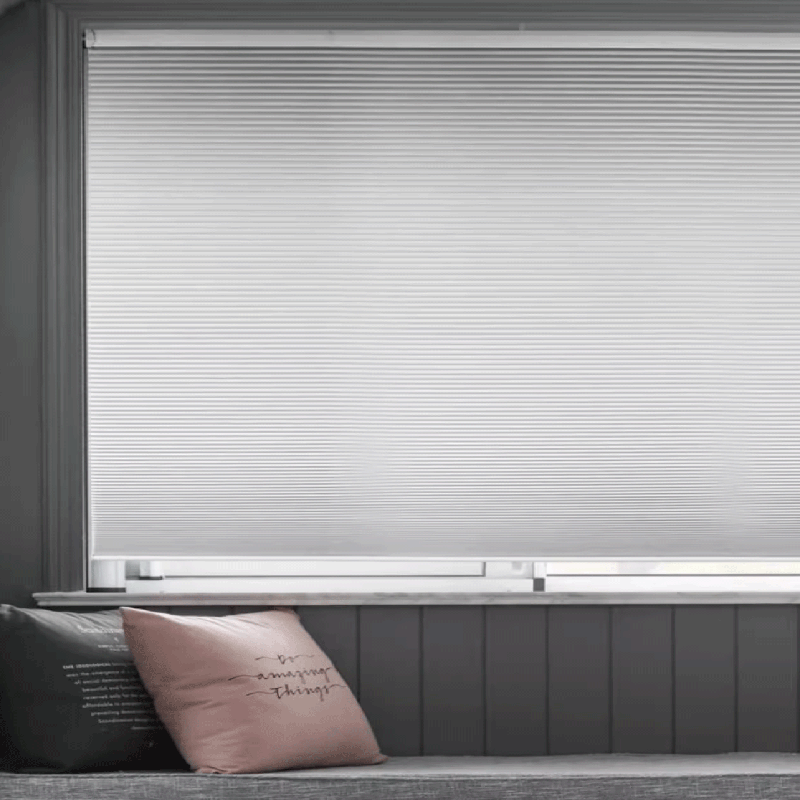
Every window treatment design carries inherent compromises. To determine if honeycomb blinds suit your home, we must weigh their undeniable benefits against their practical limitations.
These shades dominate the market for several very specific reasons. They solve functional problems better than almost any other fabric window covering.
Superior Energy Efficiency: They deliver a measurable reduction in utility bills. High-quality cellular shades boast impressive R-values. They drastically limit heat transfer through single-pane or older double-pane windows.
Exceptional Light Control: Manufacturers offer foil-lined blackout variations. The inner foil core completely stops light penetration. This makes them absolute game-changers for bedrooms, nurseries, and dedicated home theater spaces.
Minimalist Stack Height: When fully raised, the accordion-style fabric compresses incredibly tight. A large shade might compress down to just a few inches. This preserves your window views and creates a very clean, uncluttered aesthetic.
Despite their popularity, these shades pose hidden frustrations. Sales brochures rarely highlight these practical daily realities.
Cleaning Difficulty: The open side-cells are basically small tunnels. Insects, pet hair, and airborne dust easily accumulate inside these pockets. Removing trapped debris requires patience and specific tools.
Fragility of Material: Manufacturers use spun lace and bonded fabrics to keep the shades light. These materials are highly susceptible to permanent crushing. Rough handling by toddlers or clawing by active pets will permanently deform the crisp pleats.
Moisture Retention: Fabric construction makes them highly vulnerable to environmental moisture. If you install them in poorly ventilated areas, the fabric traps dampness. This inevitably invites deeply ingrained mold and mildew.
Evaluating the financial sense of cellular shades requires looking beyond the initial retail price. We need to compare their upfront cost against their functional payback over time.
Cellular shades sit comfortably in the middle-to-upper tier of window treatment pricing. They are noticeably more expensive than basic aluminum mini-blinds or standard vinyl roller shades. However, they remain significantly cheaper than custom wooden plantation shutters or high-end Roman shades. You are paying a premium for the engineered fabric and the specialized manufacturing process.
The financial return comes directly from HVAC savings. In regions experiencing extreme climate shifts, cellular shades actively lower your heating and cooling demands. Depending on your home size and local utility rates, the energy savings can offset the premium purchase price within three to five years. In milder climates, this payback period extends much further.
The fabric itself rarely fails first. The operating mechanisms dictate the true lifespan. Continuous cord loops endure daily pulling but eventually fray. Cordless push-up models rely on internal spring tensions. These springs slowly lose resistance over thousands of cycles. Motorized tracks offer excellent longevity but require periodic battery maintenance. Generally, you can expect the internal tension mechanisms to require repair or replacement long before the fabric degrades.
Strategic placement maximizes your investment. honeycomb blinds perform brilliantly in specific rooms while failing miserably in others. Matching the shade to the room environment is critical.
These specific areas deeply benefit from the unique properties of cellular fabrics.
Bedrooms: Sleep environments demand strict light and temperature control. Foil-lined blackout cells create pitch-black rooms while blocking freezing night drafts.
Living Rooms: Large viewing windows often leak heat. Cellular shades block intense afternoon sun and insulate drafty glass expanses without looking heavy or bulky.
Home Offices: Screen glare ruins productivity. Light-filtering cellular shades diffuse harsh sunlight into a soft, workable glow while maintaining thermal comfort.
Keep cellular fabrics far away from these harsh domestic environments. Installing them here guarantees a shortened lifespan.
Kitchens: Frying food aerosolizes grease. Airborne cooking oils easily bind to the spun fabric. You cannot scrub or aggressively wash cellular shades. Once grease stains the fabric, it becomes a permanent magnet for dirt.
Bathrooms: Showers generate massive amounts of steam. The constant humidity compromises the stiff fabric pleats over time. Trapped moisture inside the cells acts as a perfect breeding ground for toxic mildew.
High-Traffic Doors: Sliding doors or French doors see constant physical action. Active dogs jumping up or people pushing past the shades will quickly crush the fragile hexagonal cells.
Once you decide to purchase, you face numerous customization options. Selecting the right specifications ensures your honeycomb blinds meet your daily functional needs.
Fabric opacity determines room ambiance. Sheer fabrics offer basic UV protection while maximizing daylight. They work well in sunrooms. Light-filtering or translucent fabrics provide absolute privacy while glowing softly in the sun. They fit perfectly in living rooms. Blackout fabrics contain inner mylar layers to stop 100% of incoming light. Reserve these strictly for bedrooms and media rooms.
Cellular shades come in varying pleat sizes, typically 3/8", 9/16", or 3/4". You must match the cell size to the scale of your window. Small 3/8" cells look proportional on narrow bathroom windows. Standard 9/16" cells fit most average bedroom windows. Large 3/4" cells look stunning on massive picture windows or wide sliding glass doors. Using small cells on a huge window creates a busy, cluttered appearance.
Standard bottom-up shades pull up from the sill. However, Top-Down/Bottom-Up (TDBU) systems offer vastly superior versatility. TDBU shades allow you to lower the top section while keeping the bottom covered. You gain beautiful natural light from the upper window while maintaining complete privacy at eye level. TDBU is highly recommended for street-facing ground-floor windows.
Automated cellular shades carry a steep premium. You should justify this cost primarily for hard-to-reach windows, like skylights or two-story foyer glass. Motorization also shines for passive solar management. You can program smart shades to lower automatically during peak afternoon sun, protecting your furniture from UV fading and keeping your home naturally cool.
After objectively evaluating the evidence, we can deliver a clear verdict. Honeycomb blinds are absolutely worth the investment if your primary drivers are thermal insulation, significant energy efficiency, and precise light control. They solve specific architectural challenges beautifully. They offer unparalleled R-values and compress into sleek, minimalist profiles.
However, their worth diminishes rapidly if you place them incorrectly. They demand gentle handling and strict avoidance of moisture or grease.
Your best next step is to order physical fabric samples to assess the pleat sizes and light filtration levels. We strongly recommend measuring your primary problem windows first. Outfit a particularly drafty room or a sun-baked office to test the installation. Evaluate their performance in your specific climate for a season before committing to an expensive whole-house upgrade.
A: The most effective method is blowing debris out. Use a standard hair dryer set strictly to the cool setting to blast dust and insects out the opposite side. Alternatively, attach a clean upholstery brush to your vacuum. Place an old pair of pantyhose over the nozzle to weaken the suction, preventing the machine from crushing the delicate fabric cells.
A: Yes. They offer the highest R-value of any fabric window treatment. The internal air pockets prevent your warm indoor air from touching the freezing glass. For maximum winter protection, ensure the blinds are measured perfectly to fit tight against the window frame, minimizing edge drafts.
A: Yes. The window treatment industry uses these terms interchangeably. "Cellular shades" refers to the broader category of window coverings built with internal air pockets. "Honeycomb blinds" specifically describes the geometric, D-shaped or hexagonal profile of those air cells when viewed from the side.
A: When installed in appropriate environments, the fabric easily lasts 10 to 15 years without degrading. However, high-use continuous cord loops or internal spring tension mechanisms typically wear out or snap within 5 to 7 years. You can often repair these mechanical parts to extend the overall lifespan.


