
Views: 0 Author: Site Editor Publish Time: 2026-09-19 Origin: Site


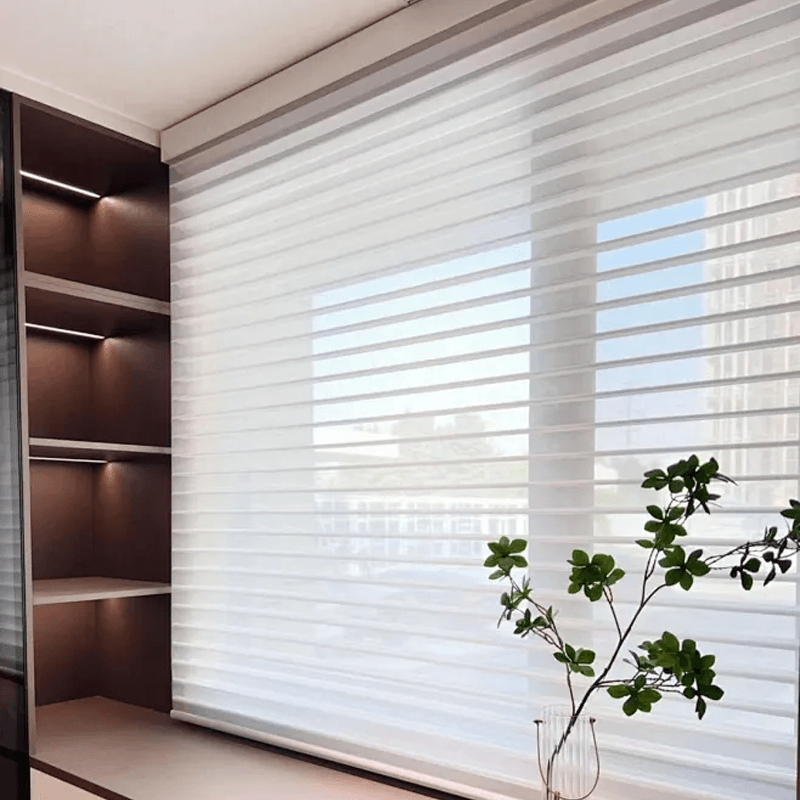
Balancing premium aesthetic appeal against functional light management presents a unique design challenge. Finding the perfect window treatment for diverse environments often feels overwhelming. Designers and homeowners alike struggle daily to merge beauty and practicality. Enter shangri-la blinds. We define these strictly as a specific style of sheer shades featuring horizontal fabric vanes suspended between two layers of sheer fabric. They offer an elegant answer, but selecting the wrong specifications easily leads to costly implementation mistakes.
This article provides a concrete evaluation framework for homeowners, commercial specifiers, and hotel procurement teams. You will learn how to properly evaluate fabric opacity and navigate strict commercial requirements. We will help you select the exact features your space demands. By following these guidelines, you can avoid common maintenance pitfalls completely and ensure a flawless installation.
Shangri-La blinds solve the "light vs. privacy" dilemma by combining the mechanics of horizontal blinds with the light-diffusing properties of layered shades.
Fabric opacity (translucent vs. room-darkening) must be matched precisely to the room's use case to prevent performance failures.
Commercial applications (offices, hotels) require strict vetting for fire-retardant certifications and hardwired motorized scalability.
Due to their delicate sheer layers, these blinds are not suitable for high-moisture or heavy-soil environments.
Vetting a reliable Shangri-La blinds supplier is critical for ensuring accurate custom measurements and long-term warranty support.
Standard roller shades offer binary control. They sit fully open or completely closed. Traditional aluminum or wood blinds look visually harsh. They also offer poor insulation for modern spaces. Suspended fabric vanes function within dual sheer panels to change this dynamic. This ingenious design solves multiple issues simultaneously.
You simply rotate the vanes to adjust light smoothly. A single rotation transitions the entire system seamlessly. They shift rapidly from UV-filtering light control blinds into total privacy window shades. You gain ambient daylighting and secluded comfort in one product. The sheer facings diffuse incoming harsh sunlight beautifully. They scatter the light rays to eliminate hard shadows. They soften the interior ambiance while protecting your expensive furniture from UV degradation.
Where does this mechanism excel? They perform brilliantly in residential living rooms. Hotel lobbies benefit greatly from their sophisticated, upscale appearance. Executive suites also match their premium profile perfectly. Conversely, you must know where they fail. Do not install them in commercial kitchens. Industrial spaces also ruin the delicate fabrics quickly. Airborne grease and heavy particulates will destroy the sheer materials within months.
You must match fabric opacity precisely to your room's use case. Making the wrong choice here guarantees performance failures. Translucent vanes provide excellent light filtering. They diffuse harsh sunlight efficiently. They also maintain an obscured view to the outside world. This level of opacity suits residential living rooms perfectly. Office conference rooms also benefit from this bright, diffused lighting. Hospitality lounges rely on translucent vanes for a welcoming, airy atmosphere.
Room-darkening vanes offer a completely different set of advantages. These dim-out or blackout vanes are lined specifically to block light when closed. However, we must address a critical assumption check here. Edge-light bleed remains inevitable because of the sheer facings. They never achieve absolute 100% blackout without dedicated side channels. You will always see a soft halo of light around the edges.
Despite this minor light bleed, they remain ideal for specific spaces. Bedrooms benefit immensely from room-darkening vanes. They support healthy circadian rhythms by blocking early morning sun. Hotel guest rooms require them for better guest sleep quality. Media rooms also utilize them to prevent annoying screen glare during daytime viewing.
Fabric Opacity Comparison Guide
Feature Focus | Translucent Vanes | Room-Darkening Vanes |
|---|---|---|
Light Control | Diffuses sunlight gently; softens room ambiance. | Blocks direct light heavily when vanes are closed. |
Privacy Level | Moderate privacy; silhouettes may be visible at night. | High privacy; blocks inward visibility completely. |
Ideal Spaces | Living rooms, lobbies, conference rooms. | Bedrooms, hotel guest rooms, media theaters. |
Known Limitations | Does not stop screen glare completely. | Edge-light bleed prevents 100% total blackout. |
Residential homes require specific functional features. You must focus on aesthetic alignment first. Custom widths ensure a perfect fit for unusual residential window shapes. Child-safety compliance remains absolutely mandatory in many regions. Government bodies like the CPSC enforce strict guidelines regarding corded window coverings. Cordless systems solve these safety concerns effectively. You eliminate hazardous dangling cords completely, protecting curious toddlers and pets.
Offices and corporate environments demand entirely different specifications. You must focus primarily on glare reduction for computer screens. Employee productivity drops sharply when sunlight hits monitors directly. HVAC efficiency also matters greatly in massive office buildings. The thermal properties of layered shades help stabilize indoor temperatures. They trap a layer of insulating air between the glass pane and the room interior. Corporate buildings also require a uniform exterior appearance to maintain architectural integrity across the facade.
Hotels and hospitality spaces introduce strict legal compliance requirements. Mandatory fire-retardant (FR) fabric certifications are non-negotiable. You must ensure all fabrics meet NFPA 701 standards or local commercial equivalents. The fabrics undergo rigorous vertical burn testing to pass. Durability stands as another massive hurdle. High-cycle testing ensures the hardware survives heavy guest use. Hotel guests rarely treat room fixtures gently, so the clutch mechanisms must withstand aggressive pulling.
Selecting the right lift system impacts both safety and longevity. The continuous cord loop offers a traditional, cost-effective solution. It works well for single-window residential use. The geared clutch inside the headrail makes lifting heavy fabrics easier. However, it poses significant safety risks for children. High-traffic commercial spaces will also experience rapid wear-and-tear on manual cords. Frustrated users often pull them at incorrect angles, stripping the internal gears.
The cordless lift provides a much safer alternative. It remains the best option for residential child and pet safety. You achieve a remarkably clean, uncluttered aesthetic. The internal spring-tension mechanism does the heavy lifting for you. The primary limitation involves the user's physical reach. You cannot easily operate a cordless shade on very tall windows without keeping a step stool nearby.
Motorization and automation offer ultimate scalability. We highly recommend exploring these automated options for modern builds:
Battery-Operated Systems: These offer a low-friction retrofit for existing homes. You avoid invasive hardwiring and drywall repairs completely. Modern lithium-ion motors only require recharging once or twice a year.
Hardwired Systems: These are essential for new commercial builds and hotels. You eliminate the endless chore of replacing batteries across hundreds of windows. Electricians run low-voltage wiring directly to the headrails during construction.
Smart Integration: Evaluate network compatibility carefully. Connect them using Smart Home protocols like Zigbee, Z-Wave, or Matter. Commercial projects should integrate them directly into Building Management Systems (BMS) for automated climate control.
You must understand the maintenance realities before purchasing. The dust and debris risk represents a significant everyday challenge. The physical gap between the two sheer layers traps airborne dust easily. Static electricity often draws particulate matter directly onto the polyester fibers. Small insects sometimes become lodged inside this gap. You cannot easily extract them once they enter. We recommend using a hairdryer on a cool setting to gently blow out trapped debris.
Moisture limitations present another strict environmental constraint. The delicate fabrics are highly prone to warping. Mold grows rapidly if you install them in high-humidity areas. Certain fungal spores thrive on damp polyester. Never place them in poorly ventilated bathrooms. Avoid installing them near kitchen sinks where splashing occurs daily.
Establish realistic cleaning protocols immediately. We must emphasize the reality of routine maintenance. You must use gentle dusting techniques. A clean feather duster works best for weekly upkeep. Alternatively, try vacuuming the surface gently. You must use a low-suction upholstery attachment to avoid pulling or stretching the sheer fabric. Never apply harsh liquid cleaners or chemical sprays. They will permanently stain the delicate materials and ruin the structural integrity of the vanes.
Choosing a reliable manufacturing partner determines your project's success. Never buy in bulk without conducting sample verification first. You must test physical fabric swatches against actual room lighting. Hold them up to the glass at different times of the day. Always check the vane rigidity yourself. Flimsy vanes will warp quickly under intense direct sunlight.
Hardware quality requires equally strict evaluation. Evaluate the headrail construction thoroughly. Aluminum headrails outperform plastic alternatives every time. They resist bowing over wide window spans. Test the smoothness of the internal clutch mechanism. It should operate silently and fluidly. Grinding noises indicate cheap planetary gears.
Assess lead times and scalability for large commercial projects. Can the factory handle massive, phased rollouts? A 200-room hotel requires precise logistical coordination. You must ensure they can deliver bulk orders without noticeable fabric dye-lot variations. A Delta E color difference between floors looks highly unprofessional.
Warranty and post-sale support finalize your decision. Look for comprehensive, long-term coverage. Motorized components typically require three to five years of warranty protection. Fabric integrity must also carry strong guarantees against severe UV fading. Partnering with a proven custom Shangri-La blinds manufacturer protects your investment. Always vet your Shangri-La blinds supplier thoroughly before signing any purchase orders or wiring deposits.
These sophisticated window treatments represent a high-value investment. They transform ordinary rooms into elegant, light-controlled spaces. However, they require precise specification based on your exact environment. You must account for user behavior, daily maintenance limits, and specific lighting needs.
Take action today to secure the best results for your space. Measure your window spaces accurately using a steel tape measure. Define your motorized versus manual operational needs clearly based on window height. Request a physical sample kit from a verified supplier immediately. Inspect the fabric opacity in your own space before finalizing your order.
A: Shangri-La is a specific brand and style name widely used in the industry. Professionals use it to describe 3D horizontal sheer layered shades. While all Shangri-La products fall under the sheer shades category, not all sheer shades feature this exact horizontal suspended-vane construction.
A: Yes, they do. When you rotate the internal vanes to the fully closed position, they function as highly effective privacy window shades. This mechanism completely prevents outward visibility and blocks outsiders from looking into your illuminated rooms at night.
A: They carry a premium price point. This higher cost directly reflects their complex fabric construction. The sophisticated dual-sheer engineering and advanced headrail mechanics require precise manufacturing, making them notably more expensive than basic single-layer roller shades.
A: Yes, but strict width and weight limitations apply. Excessive widths can cause the delicate fabric to sag or strain the headrail over time. A reliable supplier will often recommend splitting the shade into multiple individual headrails for exceptionally large commercial window expanses.


