
Views: 0 Author: Site Editor Publish Time: 2026-08-23 Origin: Site


Homeowners seeking energy efficiency often face a difficult trade-off. You want to maximize thermal insulation, but you also want to retain natural daylight. It feels impossible to achieve both simultaneously. While honeycomb blinds are inherently the most insulative window treatment on the market, your specific fabric choice matters immensely. Choosing between light-filtering and blockout fabrics significantly alters your window's thermal resistance, commonly known as R-value.
This article objectively compares the structural differences and thermal performance of both options. We will explore practical limitations to support your informed purchasing decision. You will learn how to balance daylighting needs against maximum heat retention. By understanding fundamental material science, you can optimize your home's indoor climate perfectly.
Both light-filtering and blockout honeycomb blinds utilize the same trapped-air mechanism to insulate windows, dramatically reducing heat transfer compared to standard roller or venetian blinds.
Blockout fabrics offer superior thermal insulation due to an internal Mylar/foil lining that reflects radiant heat, making them ideal for extreme climates and west-facing windows.
Light-filtering fabrics provide a moderate R-value upgrade while preserving daylight, making them the more practical choice for living spaces where heavy daytime blind usage is required.
Fabric type is secondary to installation fit; side gaps can compromise the insulation value of even the highest-rated blockout blind.
Windows act as thermal holes in your home's envelope. They lose massive amounts of heat during winter. They also let in intense solar radiation during summer. The hexagonal cellular structure tackles this problem directly. It creates a dead-air space between room air and window glass. Air acts as an excellent insulator when it cannot circulate. This trapped air principle effectively slows conductive heat transfer. Thermal energy stays exactly where you want it. You remain warm in winter and cool in summer.
The building industry uses R-values to measure thermal resistance. Higher numbers indicate better insulation performance. Standard single-pane windows have a very low R-value, typically around 1.0. Adding specialized window treatments improves this rating. You must establish realistic baseline expectations. Window shades do not replace structural wall insulation. They simply minimize energy loss through the glass pane.
You must also consider cell size and configuration. Manufacturers offer single-cell and double-cell constructions. Double-cell designs feature two rows of interconnected pockets. They naturally trap more air. They provide a higher baseline insulation capability before we even factor in fabric type. Larger cell sizes also hold more air volume. They generally insulate better than smaller cells.
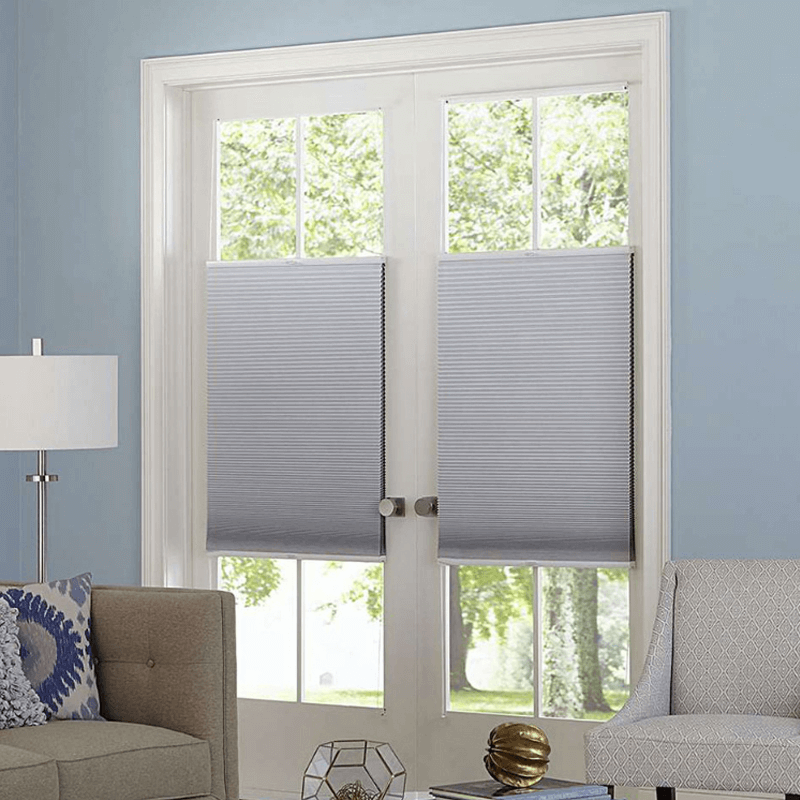
Manufacturers construct light-filtering shades using highly specialized materials. They primarily use spun-lace or point-bond fabrics. These materials diffuse harsh UV rays and intense glare. They accomplish this without fully darkening your room. You receive a soft, ambient glow throughout your living space. This natural illumination makes rooms feel open and inviting.
Let us evaluate their thermal capability. Light-filtering models offer a solid baseline R-value. They prevent significant heat loss during frigid weather. They also reduce solar gain during warm afternoons. However, they lack a dedicated radiant barrier. Infrared heat can still penetrate the fabric over time. They slow down temperature changes but do not block them entirely.
We must introduce the behavioral advantage here. Real-world usage dictates insulation success. You are highly likely to keep light-filtering shades closed during the day. This constant closure maintains the insulation barrier perfectly. They do not plunge your room into total darkness. If you must raise a window covering to read or work, you lose all thermal benefits instantly.
These fabrics work beautifully in specific areas. They are the ideal choice for living rooms, kitchens, and home offices. In the Southern Hemisphere, they suit North-facing windows perfectly. In the Northern Hemisphere, use them on South-facing glass. These orientations receive abundant, consistent daylight.
Best Practices for Light Filtering Models:
Keep them lowered during peak sun hours to maximize energy diffusion.
Layer them behind decorative sheer curtains for added interior style.
Install them in active spaces where daily tasks require natural illumination.
Regularly dust the fabric folds to maintain maximum light transmission.
Blockout fabrics hide a highly engineered secret inside their structure. They feature an internal metallic or Mylar coating. Manufacturers apply this coating directly inside the cell walls. This thin, invisible layer completely transforms the product's thermal profile. You cannot see the foil from the outside or the inside of the room.
This metallic lining actively addresses radiant heat transfer. It functions as a powerful radiant barrier. During summer months, it actively reflects solar heat outward. In winter, it reflects infrared room heat back into your living space. Conductive resistance combines seamlessly against radiant reflection for ultimate climate control.
We see a significant performance premium here. Blockout models yield the highest possible R-value for internal window treatments. Standard light-filtering options improve a window's R-value by 1.0 to 1.5. Blockout versions often double this improvement. They provide the most aggressive defense against extreme outdoor temperatures.
Below is a general performance comparison based on material composition:
Fabric Type | Radiant Barrier | Light Transmission | Relative Insulation Value |
|---|---|---|---|
Single-Cell Light Filtering | No | Moderate to High | Good |
Double-Cell Light Filtering | No | Moderate | Very Good |
Single-Cell Blockout | Yes (Foil Lined) | Zero | Excellent |
Double-Cell Blockout | Yes (Foil Lined) | Zero | Superior |
Choose blockout models for specific environments. They excel in bedrooms and media rooms where darkness is necessary. They work wonders in drafty, older homes lacking modern wall insulation. Use them on windows enduring direct, harsh afternoon sun. East and West-facing windows benefit immensely from this radiant barrier.
Common Mistakes to Avoid:
Installing blockout shades in a home office where you need natural task lighting.
Assuming they will completely black out a room without specialized side channels.
Leaving them fully raised during hot summer afternoons to view the outdoors.
Technical superiority often clashes against practical daily living. We call this the R-value versus lifestyle trade-off. A blockout shade provides zero daytime insulation if you fully raise it. If you must pull the shade up to see your computer screen, you sacrifice the barrier. Your highly rated window treatment becomes useless sitting tightly coiled at the top of the frame.
You must assess the cost-to-benefit ratio logically. Think about your local climate severity. Standard light-filtering models already save significant energy. Blockout fabrics push these efficiency gains further in extreme climates. Evaluate whether the slight premium for blockout fabrics translates to noticeably lower HVAC dependency. In temperate zones, standard light-filtering might suffice perfectly.
Fortunately, you do not have to choose just one fabric. You can introduce the hybrid day/night solution. This setup combines a sheer or light-filtering cell alongside a blockout cell. Both fabrics sit on the exact same headrail. You lower the sheer section during the day for diffused light. You deploy the blockout section at night for maximum insulation. By incorporating dual honeycomb blinds, you maximize versatility. This dual system offers ultimate environmental control.
Fabric type means nothing without proper installation. The flanking draft problem ruins many insulation attempts. Air bypass occurs when drafts sneak around the edges of any blind. Warm room air can slip behind the fabric easily. It then hits the cold glass immediately. Rapid heat loss and condensation occur. Air bypass will negate the thermal benefits of both light-filtering and blockout fabrics.
Let us evaluate inside mount versus outside mount configurations. An outside mount overlaps the window frame completely. This physical overlap generally seals side drafts much better. An inside mount sits flush inside the window recess. It looks cleaner but requires extremely precise measuring. Even a quarter-inch gap allows significant air leakage.
You can enhance the seal using secondary hardware. Many manufacturers offer side tracks or U-channels. The edges of the shade run securely inside these physical tracks. You can also install bottom brush seals. These additions lock in the air pocket permanently. They maximize your chosen fabric's R-value by eliminating potential flanking paths entirely.
Audit your windows methodically. Follow these step-by-step criteria based on room function and environment.
Identify the room's primary purpose. Sleep requires blockout materials. Active living requires light-filtering materials.
Determine window orientation. West-facing windows bake in the afternoon sun and need reflective foil.
Pinpoint your main pain point. Decide if you are fighting winter cold or summer heat gain.
Evaluate your window frame depth to see if an inside mount is structurally feasible.
Consider advanced operating systems closely. Look deeply into Top-Down/Bottom-Up (TDBU) configurations. TDBU mitigates the oppressive darkness of blockout materials. You can lower the top portion to allow daylight entry across the ceiling. Meanwhile, you keep the lower portion closed to insulate the main glass area. This retains privacy while actively managing room temperature.
Take concrete next steps. Order several fabric samples today. Test their light penetration against your actual windows. Inspect the foil lining quality on various blockout options. Finalize your measurement tolerances meticulously. Precision remains key. High-quality honeycomb blinds require incredibly tight fits to perform well.
Neither fabric option is a marketing gimmick. Both provide verifiable thermal benefits based strictly on fluid dynamics and material science. You trap air to stop conductive heat transfer. You add foil to stop radiant heat transfer. The fundamental physics hold up perfectly under scrutiny.
Your final recommendation depends entirely on your lifestyle. Choose blockout fabrics where temperature control and deep sleep are paramount. Choose light-filtering fabrics where daily livability and moderate thermal regulation intersect gracefully.
To move forward effectively:
Browse specific fabric collections to match your interior design aesthetic.
Order free material samples for hands-on comparison in your own home.
Book a professional consultation to guarantee precision measuring.
Properly fitted honeycomb blinds will permanently transform your living environment.
A: Yes, they dramatically improve heat retention. The cellular structure traps cold air against the glass, preventing it from chilling your room. However, you must ensure a tight fit. Large side gaps will allow cold drafts to bypass the blind, negating the insulation benefits completely.
A: They offer excellent privacy, but they are not completely opaque. Under interior lighting, people outside might see soft silhouettes or shadows moving close to the window. They diffuse light effectively, preventing clear visibility from the outside looking in.
A: Some cheaper mylar linings can produce a faint crinkly sound if the window is open and wind blows directly against them. Premium manufacturers use integrated or bonded metallic layers. These advanced linings eliminate the noise, operating just as quietly as standard fabrics.
A: They do not prevent condensation directly. By insulating the room, they trap cold air against the glass. If your indoor humidity is high, moisture may still condense on the cold pane behind the blind. You should ensure proper room ventilation to manage this moisture effectively.


